


Household Energy Storage System FAQ

Preface: This FAQ covers the most frequently asked questions from global end-users and distributors about residential solar battery energy storage systems, including basic principles, product selection, safety, lifespan, installation, grid compatibility and after-sales issues. All answers adopt professional and authentic English expressions, suitable for website display, customer inquiry reply and product catalog matching.
1. Basic General Questions
Q1: What is a home energy storage system?
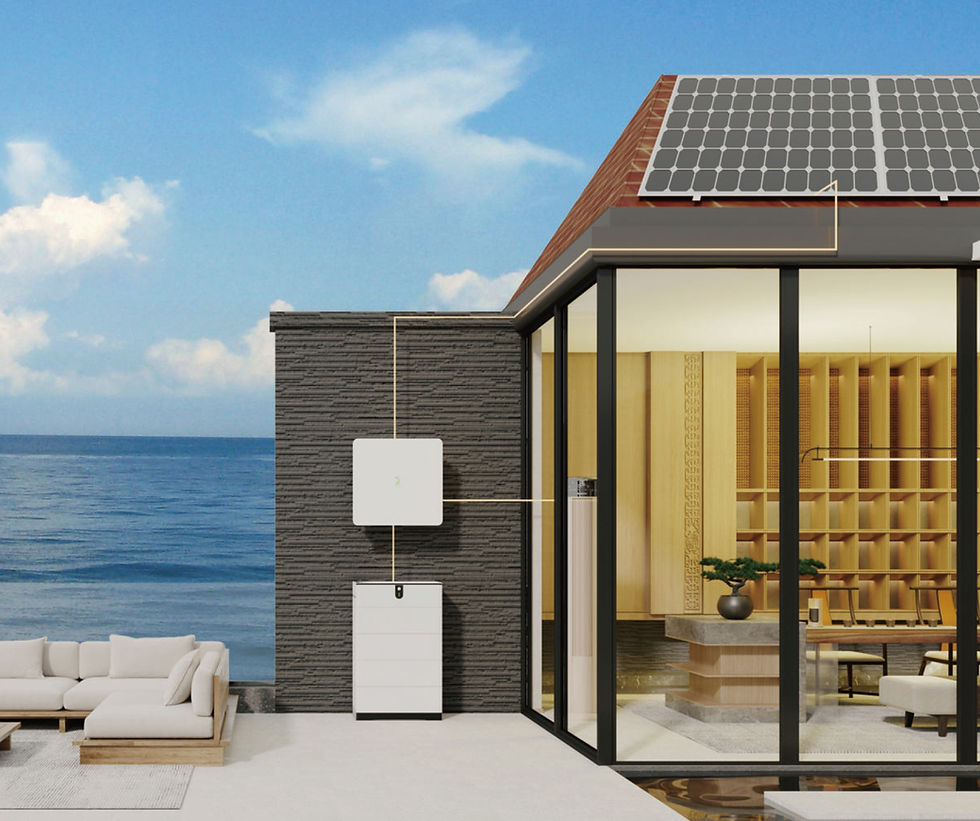
A home energy storage system is a complete residential power solution consisting of a hybrid inverter, lithium battery pack, BMS (Battery Management System), and optional solar PV panels. It stores excess electricity generated by solar panels or off-peak grid power in batteries, and supplies power to household loads during nighttime, peak tariff periods or grid outages.
Q2: What are the main benefits of installing home energy storage?
First, it reduces household electricity bills via peak-valley arbitrage and 100% self-consumption of solar power. Second, it provides uninterrupted backup power during blackouts or grid instability. Third, it realizes independent green power supply and reduces reliance on utility grid power. Fourth, it protects home electrical devices with stable voltage and frequency output.
Q3: Can the storage system work without solar panels?
Yes. The system can charge directly from the municipal grid during off-peak low-price hours for peak-hour power use. Matching with solar PV panels can maximize power saving efficiency and achieve zero-carbon household power consumption.

2. Product & Configuration Selection
Q4: What battery type do your home storage systems use?
We adopt LiFePO4 (Lithium Iron Phosphate) batteries for all residential energy storage products. Compared with ternary lithium batteries, LiFePO4 batteries feature higher safety, longer cycle life, better thermal stability and no thermal runaway risk, which is the most ideal battery type for household energy storage scenarios.
Q5: What capacity is suitable for an average family?
For regular families with basic loads (lighting, refrigerator, TV, router): 5kWh–10kWh is sufficient for daily use and short-time power backup. For families with high-power loads (air conditioner, water heater, kitchen appliances) or areas with frequent power outages: 10kWh–20kWh high-capacity configuration is recommended. We also support customized capacity and power solutions.
Q6: What is the difference between on-grid, off-grid and hybrid systems?
On-grid system: Works only with grid connection, no backup power function, mainly for power saving and grid feed-in. Off-grid system: Completely independent of the grid, suitable for remote areas without grid coverage. Hybrid system: Supports both grid connection and off-grid backup mode, automatic switching, compatible with solar and grid charging, which is the most versatile and mainstream choice for global households.

3. Safety & Lifespan
Q7: Is the home battery storage system safe for indoor use?
Absolutely safe. Our LiFePO4 battery packs are equipped with intelligent BMS full-protection system, supporting over-charge, over-discharge, over-current, short-circuit, over-voltage and high-low temperature protection. All products pass CE, FCC, IEC and other international safety certifications. With standard installation in ventilated and dry indoor or outdoor environments, there is no safety hazard.
Q8: What is the cycle life and service life of the battery?
The LiFePO4 battery has a 6000+ full cycle life (remaining capacity ≥80%). The overall design service life of the system is 10–15 years, which can meet the long-term household power consumption needs. Even after slight capacity attenuation, the battery can still work normally for daily load power supply.
Q9: Will the battery explode or catch fire?
Our qualified LiFePO4 batteries have ultra-high thermal stability and no flammable and explosive risks. The built-in multi-level safety protection system can automatically cut off power supply in case of abnormal conditions. There is almost no fire or explosion risk under normal use and standard installation.

4. Installation & Operation
Q10: Does the system support seamless switching during power outages?
Yes. The hybrid inverter supports UPS-level seamless switching (switching time <10ms). It can ensure uninterrupted power supply for precision electrical equipment such as computers, monitors and refrigerators without shutdown or restart.
Q11: Can the system be wall-mounted or floor-standing?
Our household energy storage products support dual installation methods: wall-mounted and floor-standing. They feature compact structure, small floor space and simple installation, suitable for family balconies, equipment rooms, garages and other scenarios.
Q12: Does the system affect the local power grid?
No. The system is equipped with standard anti-islanding protection, overvoltage and overcurrent protection functions, which will not cause impact or damage to the public grid. It fully complies with global grid access standards and local power bureau regulations.

5. Economic & Functional Questions
Q13: Can I sell excess electricity back to the grid?
Yes. The on-grid/hybrid system supports grid feed-in. Excess solar power can be uploaded to the public grid to obtain grid electricity revenue. The specific feed-in tariff depends on the local grid policy of the customer's country/region.
Q14: What is the working temperature range of the system?
The system can work stably at -20℃ to 60℃, adapting to most climatic conditions in Europe, Southeast Asia, Africa, America and other regions. It supports normal charging and discharging in high temperature summer and low temperature winter environments.
Q15: Does the system support mobile APP monitoring?
Yes. It supports WiFi/4G remote connection and mobile APP real-time monitoring. Users can check real-time power generation, battery remaining power, load power consumption, historical data and system operating status remotely, and realize remote parameter setting and fault inquiry.

6. After-sales & Warranty
Q16: What is your warranty policy?
We provide 5–10 years official warranty for battery packs and 2–5 years warranty for inverters (different configurations have different warranty terms). During the warranty period, we provide free replacement and maintenance for non-human damaged product failures. We also provide lifelong technical support and global after-sales guidance.
Q17: Is technical installation guidance provided for overseas customers?
Yes. We provide detailed English installation manuals, operation videos, wiring diagrams and one-on-one online technical guidance. For bulk order distributors, we can support overseas engineer door-to-door training service.
Q18: What certifications do your products have?
Our household energy storage systems have passed CE, FCC, ROHS, IEC, TUV and other international authoritative certifications, which can meet the customs clearance and market access requirements of most countries and regions around the world.


Comments