


50 MW PV Power Project
- infosanopower
- Aug 30, 2025
- 2 min read

JINWU Road Phase III PV Power Project
The Jinwu Road Phase III Photovoltaic Power Project is the first grid-connected solar-plus-storage new energy power plant in Jinchang City.
Construction Timeline: The PV plant started construction on December 10 last year, and by February 10 this year, it was already ready for full-capacity grid connection.
Annual Power Generation: Up to 95 million kWh.
Environmental Benefits: Reduction of approximately 8,000 tons of CO₂ emissions annually.
Energy Storage System: Equipped with a 10 MW / 20 MWh storage facility, which supports peak shaving, frequency regulation, and peak–valley load shifting.
Grid Benefits: The energy storage system enhances grid stability and operational safety.

Integration of Energy Storage with the Jinwu Road Phase III 50 MW PV Power Project
With the rapid development of solar PV and other new energy industries, equipping power plants with energy storage has become not only an industry trend but also a mandatory requirement for grid connection. For new PV power stations, an energy storage facility with a capacity equivalent to 20% of the installed PV capacity must be included.
For the Jinwu Road Phase III 50 MW PV Power Project:
Storage Construction Start: April 25
Completion Date: June 10
Quality Inspection: Passed quality acceptance by the Testing and Inspection Center Station on June 18, officially allowing grid connection and operation.
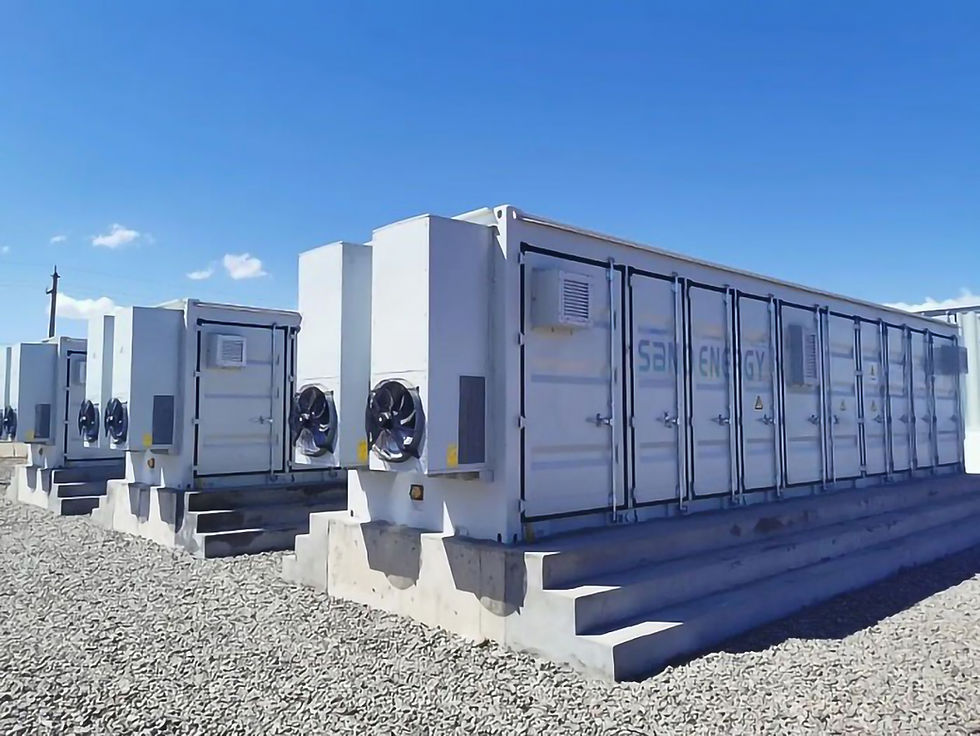
Just 500 meters from the project’s central control room, a row of containerized “power banks” houses the energy storage facility. This station adopts an outdoor container-integrated design, with storage converters, transformers, and switchgear installed inside.
Each containerized unit is equipped with:
Independent power supply system
Fire alarm and detection system
Lighting and safety evacuation system
Emergency response system
Automated control and safety protection systems
This design ensures high integration, safety, and reliability, while providing essential peak shaving, frequency regulation, and grid stability support for the PV plant.

Energy Storage System Overview
The energy storage station is divided into three units, with each unit containing one converter & step-up cabin and two battery cabins. At a charging power of 10 MW, the system can be fully charged in two hours, storing 20 MWh of energy—equivalent to 20,000 kWh of electricity.
The system is equipped with an Energy Management System (EMS), which collects and integrates data from multiple independent storage monitoring subsystems. These include the Battery Management System (BMS), storage converters, meters, and measurement & control devices.
Through unified data monitoring, the EMS enables comprehensive supervision, comparison, and analysis of:
System operation status
Fault information
Power consumption data
Power generation data
Storage efficiency
Battery performance
This integrated monitoring and analysis improves overall system efficiency, operational reliability, and intelligent management capability of the PV + storage power station.


Comments